
April 16, 2026 – written by Ayla Stults-Lopez
As we start preparing for spring, you may have already started making a list of all the plants you’re hoping to sow or purchase this year, but are you planning your colors or the layout of your garden? At times, we can start with a desire for certain plants or flowers, maybe plants we’ve been thinking about all winter, but what if we took a step back and thought about the overall look and flow of the garden? What feeling do you want to create? Color is a wonderful tool used for evoking feeling/mood or making the most out of the colors you already have. If you’re strategic about the colors and layout, you can make your plants and garden truly pop!
What is Color Theory?
According to Modern Met, “Color Theory is the science of how we perceive different hues and the creative way in which artists mix, match, and blend a wide range of colors to please the eye.”
Think of your garden as a canvas. Unconsciously, you may already be drawn to your favorite colors, but are you paying attention to how they interact with the rest of your garden? Is there a way to incorporate other colors to make them stand out?
Using color theory and a handy-dandy color wheel can make a major impact on how your garden comes together. Whether you’re starting from scratch or are adding to gaps, this is a useful tool at your disposal.
How to work with color?
To start, I recommend buying a pocket color wheel. It may seem a little silly but having this in your back pocket while shopping greatly helps with choosing the right plants and streamlining your options. It all centers around the relationship a color has with other colors, and a color wheel is the easiest way to visualize this.
Creating a garden that pops! Contrasting colors:
If you want your garden to be striking, choose contrasting colors. These are colors that are opposite to each other on the color wheel. This is a great way to show off the colors you already have in your garden. Yellows and blues together or reds and greens show the boldness in each color. A helpful tool to visualize this contrast is putting your phone camera in black and white mode and looking for different shades of greys. If colors are looking a similar grey then it’s better to separate them with a darker grey/black in between, which creates desirable high contrast.
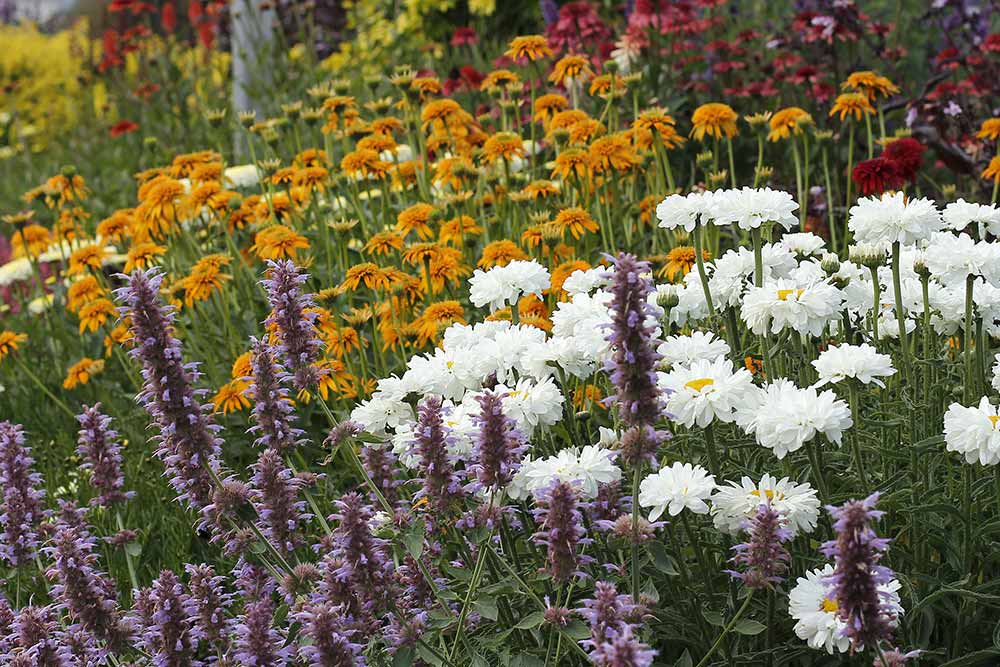
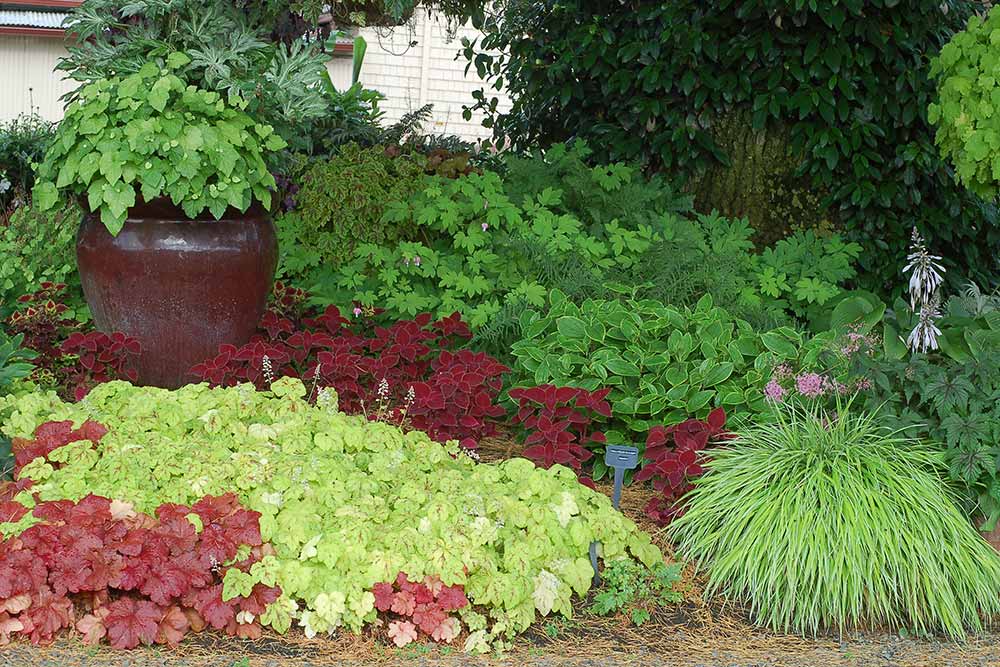
Adding nuance. Split complementary colors:
With split complementary, the colors are contrasting but with less tension than contrasting colors. Since you aren’t using colors that are directly across from one another, and instead are using the 2 colors to each side of the complimentary color, it gives a more subtle boost. The colors complement the focus color and add (enhance maybe?), but don’t compete.
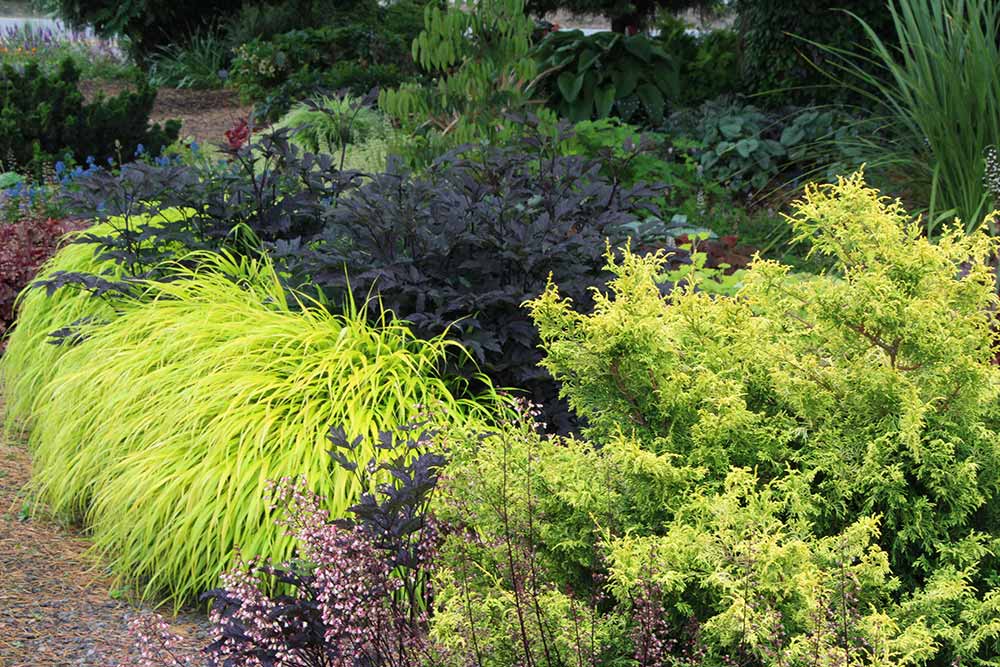

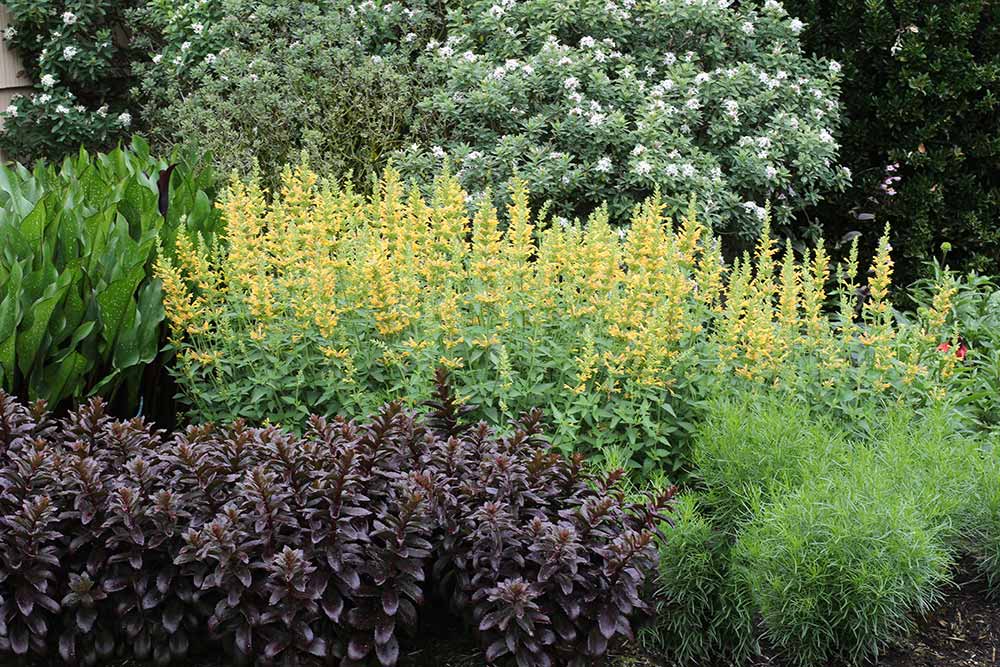
Creating color gradients. Analogous colors:
Using colors that are next to each other on the color wheel can give a nice palette selection. Sticking to a palette of reds, oranges, and yellows gives a warm feel, while in contrast, sticking to blue, green, and purple has a cooler vibe. This gives you a more cohesive range and an easy frame of reference for when you’re plant shopping.
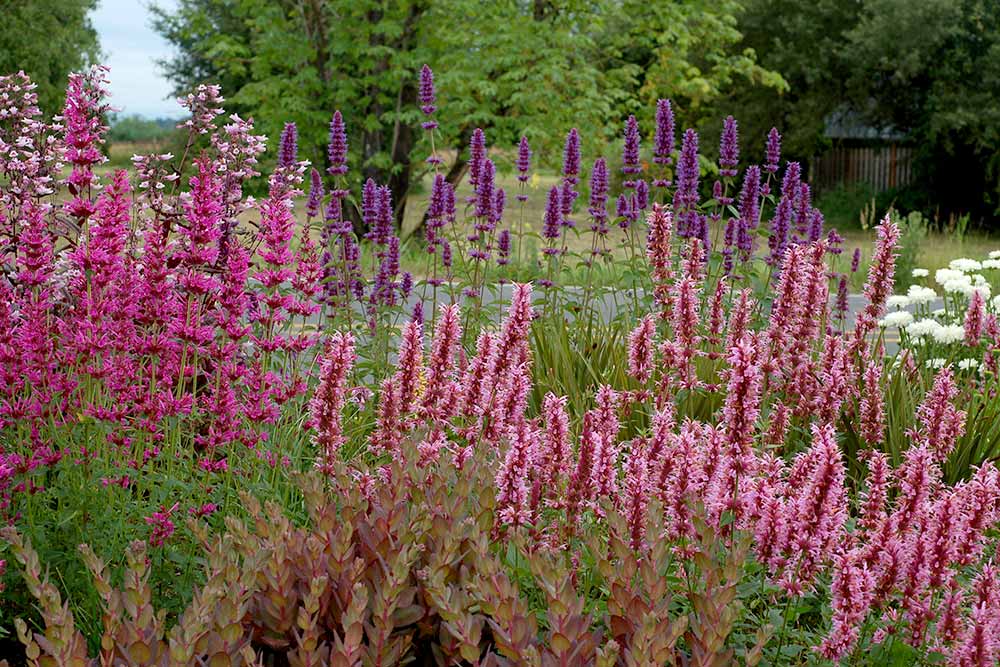
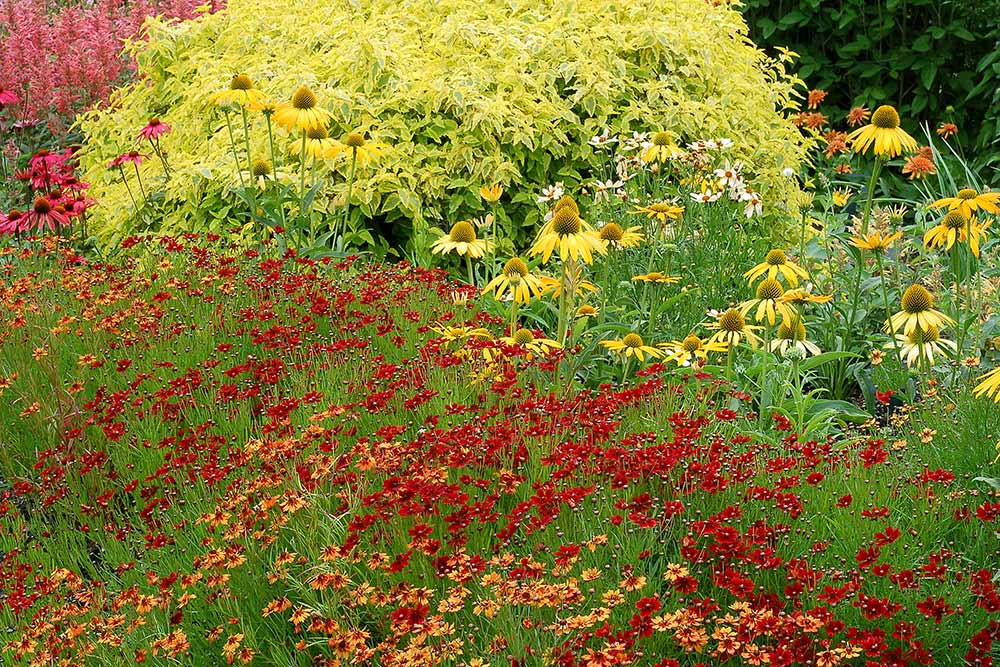
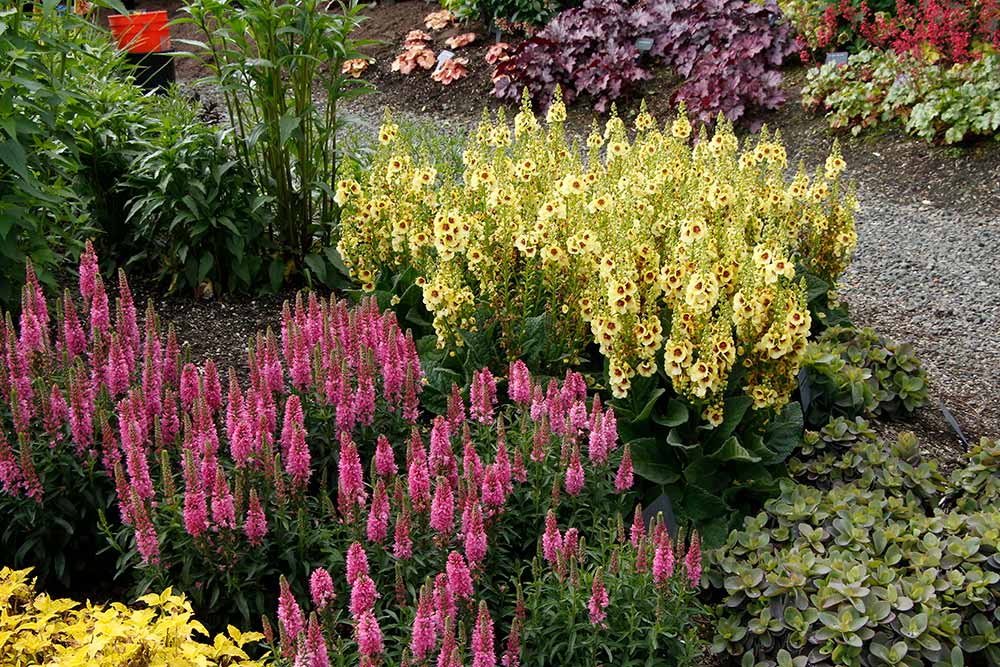
One color/themed gardens. Monochromatic:
Monochromatic means focusing on one color throughout the garden, often involving different shades of said color. As we see from the recent popularity of Noir gardens or green drenching, this has become a more popular trend. Having one color makes a bold statement and can give a unique personality to the garden. Having just one color to focus on leaves room to highlight different textures and shades.
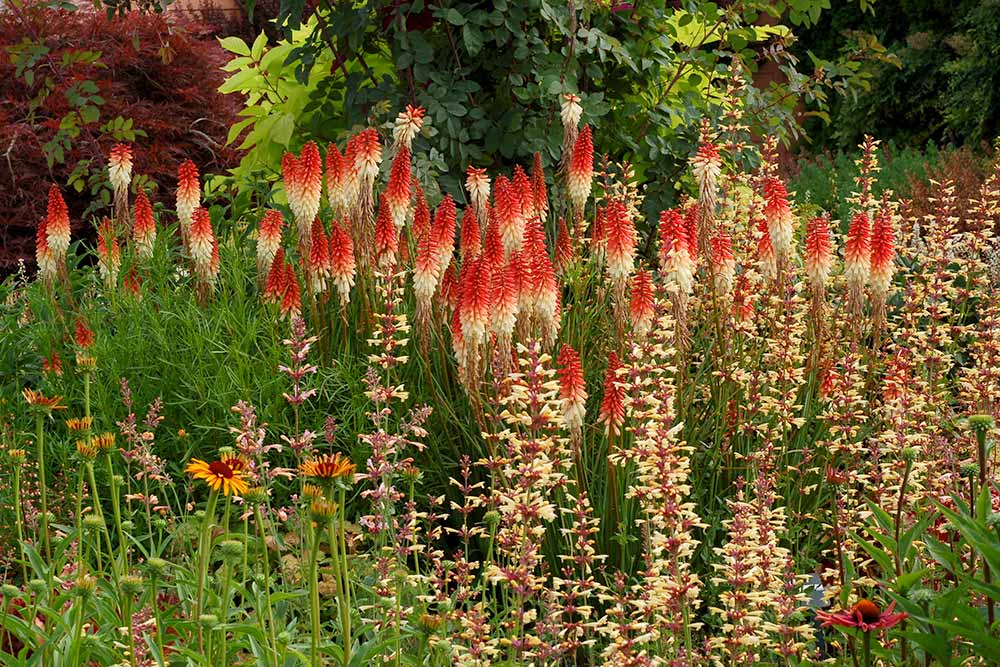
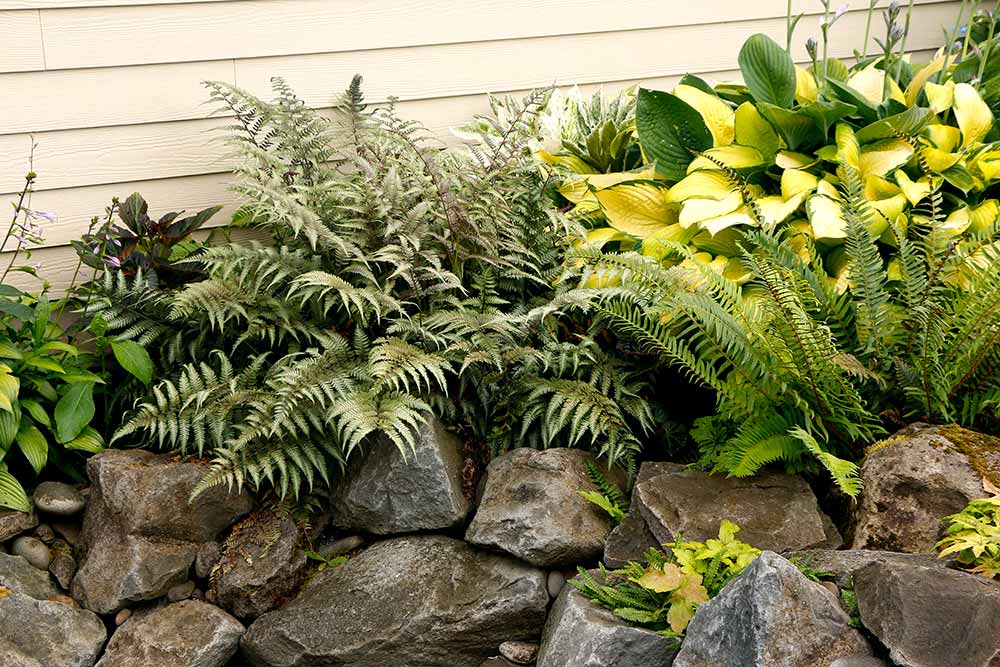
As you can see, there are many different ways to approach color in the garden. Asking what impact you want to make. Surveying your space as it is now and being honest with yourself on the colors/plants you tend to lean more towards. All this can help you avoid getting lost or creating a garden that doesn’t feel cohesive. So next time, don’t be scared to pull out your color wheel while shopping so you can ensure you’re getting the right plants for your space!
Color Theory
Want to design a stunning garden that instantly catches the eye? In this video, we break down color theory for garden design and show you how to choose the perfect plant color combinations to transform your outdoor space. You’ll learn how to use complementary colors, analogous palettes, and monochromatic schemes to create balance, contrast, and visual impact in any garden.
Analogous Colors
Ready to design a garden with color that feels both harmonious and eye‑catching? In this video, we explore how analogous color theory and complementary color pairs can work together to create visually stunning, professionally balanced garden designs. Whether you want a calming, unified palette or bold, high‑contrast plant combinations, understanding how color relationships function in the landscape will completely transform your approach to planting.
Complementary Colors
Want to design a garden that truly pops? In this video, we explore how complementary colors—the color pairs opposite each other on the color wheel—can transform your garden into a vibrant, balanced, and visually striking outdoor space. Using foundational color theory, we break down how to pair plants, flowers, foliage, and hardscape materials to create contrast, harmony, and a professional-looking landscape.
Split Complementary Colors
Transform your garden with the power of split complementary color theory! In this video, we break down how designers use split complementary color palettes to create balance, harmony, and high-impact contrast in the landscape. You’ll learn how to choose plants based on color relationships, how to use warm and cool tones strategically, and how split complementary schemes can make your garden look professionally designed—without the overwhelm.
The 60/30/10 Rule
Want a garden that looks effortlessly balanced and professionally designed? In this video, we break down the 60‑30‑10 Rule, a timeless design principle that helps you create harmony, contrast, and visual structure in any outdoor space. Whether you’re planning a new landscape or refreshing your current garden beds, this simple ratio will completely transform the way you think about color and composition.