
December 23, 2025 – written by Ayla Stults-Lopez
Every so often, we get reports of Echinacea flowers blooming with no petals or very few stunted/deformed petals.
What causes this?
We reached out to our expert to confirm. Alison Kutz, Owner of Sound Horticulture, shared the following information based on photos (Figures 1, 2 & 3 below).
Here was her take:
“…what everyone is calling the coneflower rosette mite, yet …searching and reading it is clear that we don’t have a name for it beyond that.”
“The Coneflower Rosette Mite is not yet taxonomically described, so it lacks a scientific name and is classified within the family Eriophyidae. Current research suggests it is a new or a species complex of an Aceria mite, with ongoing work to fully categorize and describe it.” (Kutz)
How do we identify?
In extreme cases of mite infestation, you may start to see a yellow dusting and small webs. Rosette mites are so small you can’t see them with the naked eye. Under magnification they are <1mm and carrot shaped.
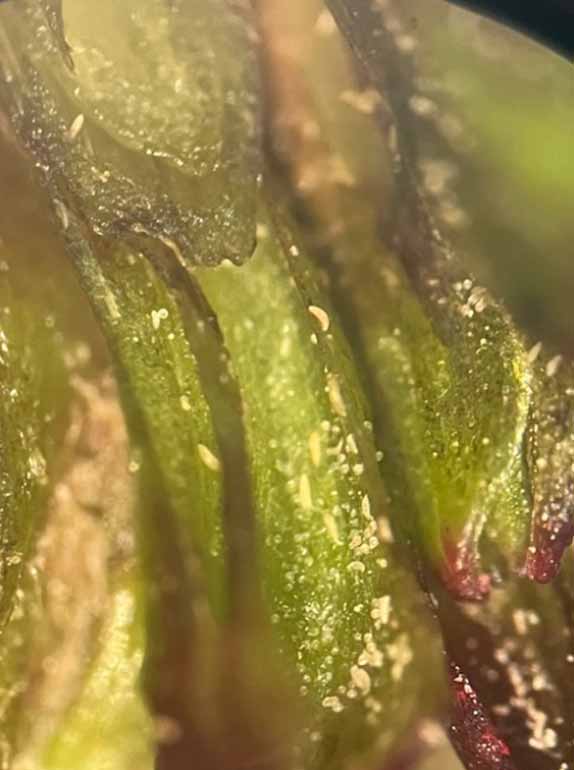
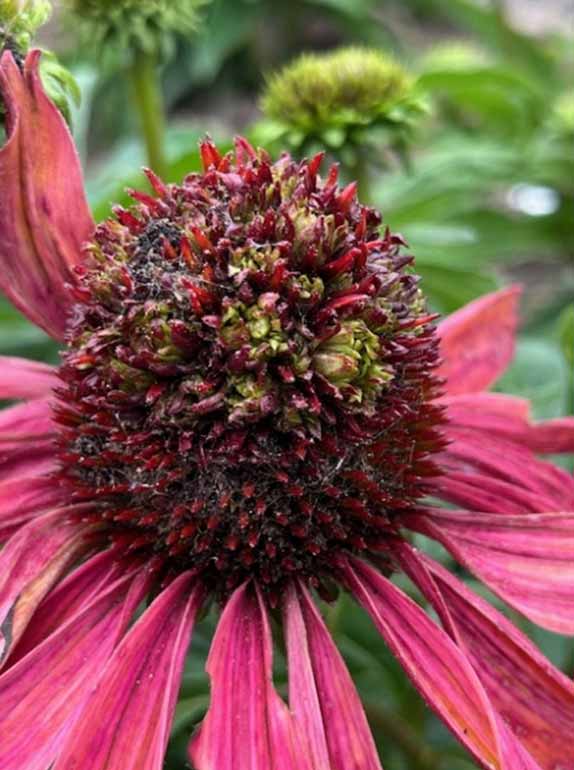
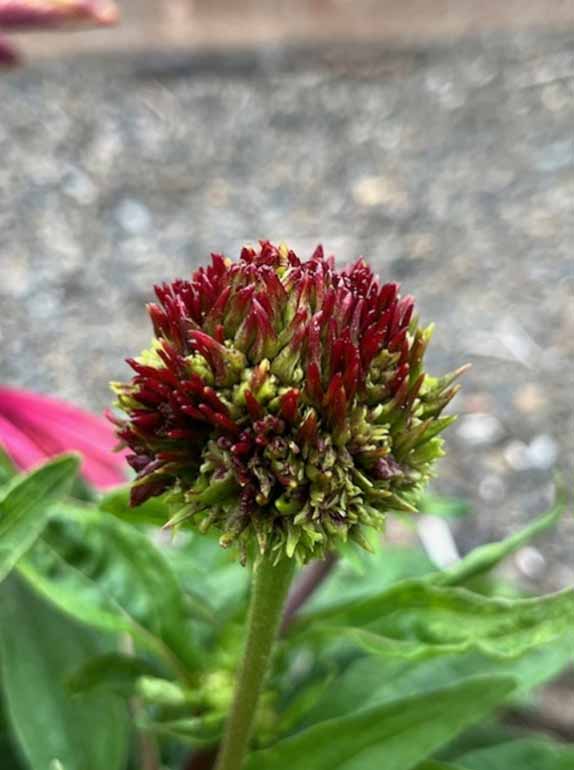
(Figure 1, 2 & 3 photos courtesy of Eleanor Jolley)
At times, symptoms can be confused with Aster’s Yellow/Phytoplasma, but Phytoplasma symptoms show up more as leaflike structures growing from the cones, also called phyllody, giving an almost fascinating look to them. As well as yellowing of the foliage.
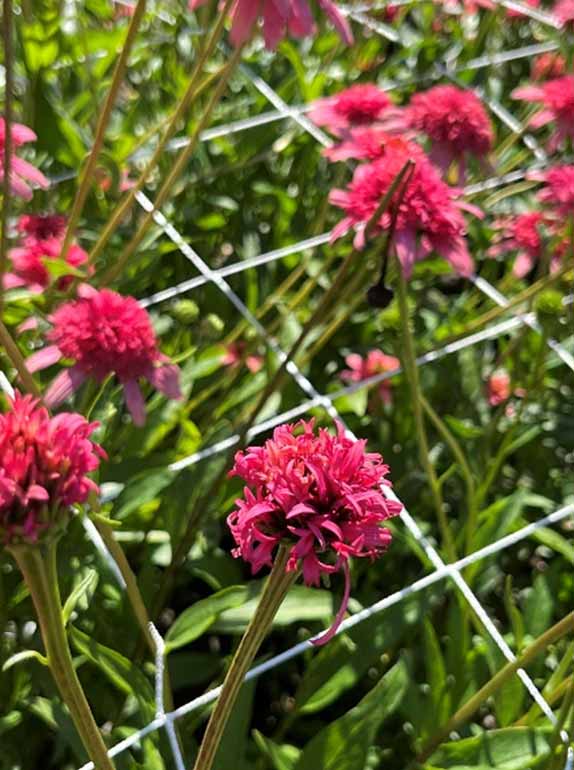
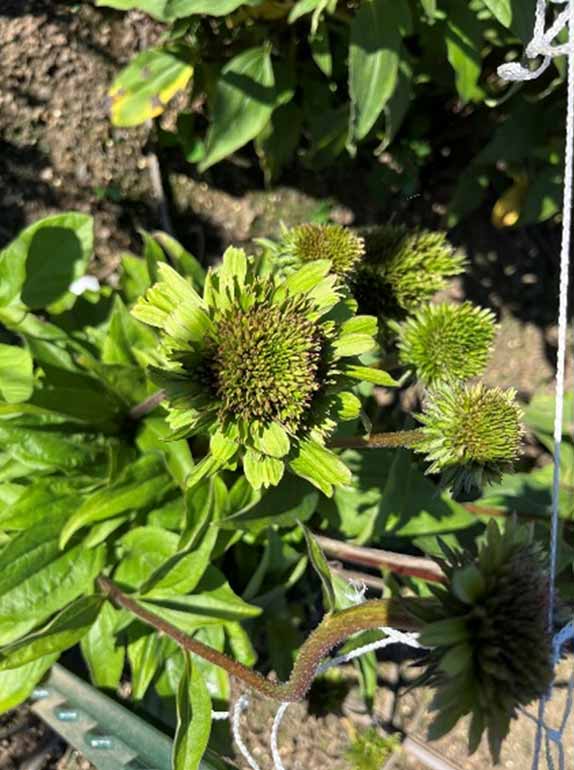
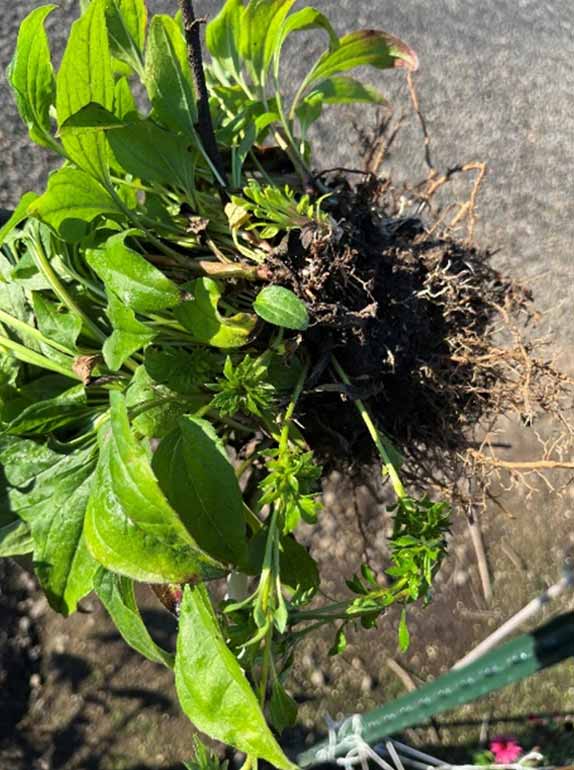
(Figure 4, 5 & 6 photos courtesy of Eleanor Jolley)
So, what can you do?
First step is to cut back blooms and sanitize tools, this can help reduce mite populations, but it’s highly recommended to bag and toss the entire plant, roots and all.
Miticides can be used both as a preventative measure and as a treatment. Be aware of increased mite activity at tops of cones on warm windy afternoons as they can easily spread.
According to Alison, some beneficials that can aid in control are Cucumeris, Andersoni, and Galandromus.
If you’d like to see more diagnostic photos, Oregon State University has been an excellent resource for us here.
Reach out to an expert! We trust Sound Horticulture with all our head-scratching questions.
Citations:
“Coneflower Cleanup.” Osu.edu, 27 Aug. 2017
Accessed 18 Dec. 2025.
Kutz, Alison. Pest Diagnosis and Treatment. 19 Nov. 2025.
Photos courtesy of Eleanor Jolley